Property Line vs. Fence: Where Your Boundary Really Is
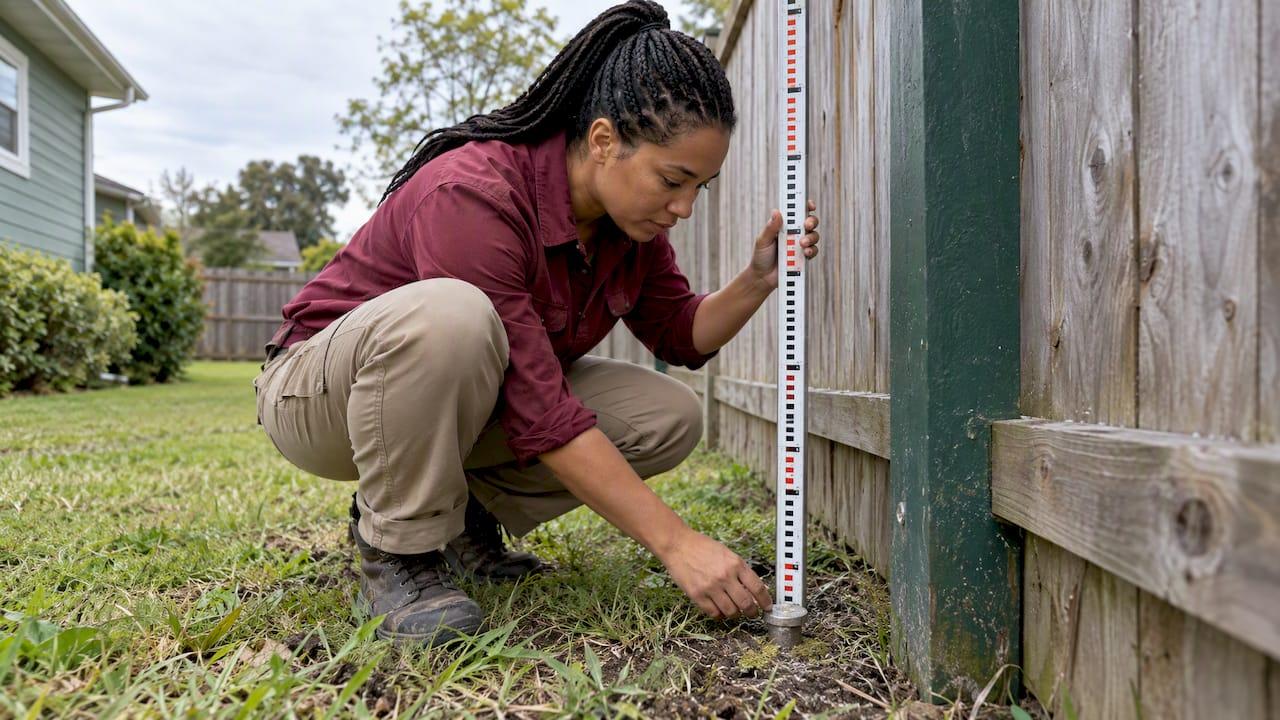
A fence and a property line are two different things. The property line is a legal boundary described in your deed and recorded survey. A fence is a physical structure that someone built, maybe decades ago, maybe a foot or two off the line for reasons nobody remembers. Treat the fence as the boundary and you can end up building, planting, or paving on land you don’t own.
This guide explains how the two differ, how to find the real line before you build, where a new fence should sit, and what to do when the old fence and the survey disagree.
TL;DR
- The property line is a legal boundary. A fence is only evidence of where someone once thought the line was.
- Only a licensed land surveyor can definitively establish the line. Plats, deeds, and survey pins are good clues, not final answers.
- Many cities require a new fence to sit entirely inside your property line, so plan to set it back a little and check local permit rules first.
- Building a fence on your own land does not change the boundary or hand your neighbor ownership of anything.
- Map your planned fence on aerial imagery before you request quotes, so contractors bid on the same, measured scope.
Table of Contents
- Why a fence is not proof of the property line
- How to find your real property line
- Where should the fence go: on the line or inside it?
- Does a fence inside your line change the boundary?
- A quick comparison: property line vs. fence
- Mapping the fence before you ask for quotes
- Our perspective
- If your neighbor’s fence or yours is in dispute
- Planning your fence around the line: a checklist
- FAQ
- Sources
Why a fence is not proof of the property line
People assume fences follow boundaries because many do. But the Oklahoma Society of Land Surveyors points out that fences often follow utility easements, setback lines, terrain, trees, or plain convenience rather than the actual line. A previous owner may have fenced around a slope, a mature oak, or a garden bed. A farmer may have run wire along the easiest path. A builder may have set posts before the lot was ever surveyed.
The same society offers a useful rule of thumb: assume a fence you did not build is not on the property line unless a licensed land surveyor has established where it sits. That is a cautious default, and it saves a lot of arguments.
So when you see a fence that looks “close enough,” remember what you are looking at. It is a structure. The line is a measurement tied to recorded documents.
What the property line actually is
Your property line comes from the legal description in your deed, the recorded plat of your subdivision, and any recorded survey. Surveyors locate it on the ground using monuments, usually metal pins or caps set at the corners, and they measure from those points. Nothing about a fence, a hedge, or a row of mailboxes changes that description.
Why mismatches are so common
The usual reasons a fence and a line disagree:
- Old construction. The fence predates the current survey or the current owners.
- Convenience. Posts went where the ground was level or where a tree was in the way.
- Easements. Utility easements run along many lot lines, so owners fence at the edge of the easement instead.
- Neighbor agreement. Two owners once agreed informally to “just put it here.”
- Estimating. Someone paced it off or used a fence they assumed was right.
None of these make the fence the boundary. They only explain why you shouldn’t trust it.
How to find your real property line
Start with paper, then confirm on the ground. The Snohomish County guidance on finding property lines is a good model of the process. It lists legal descriptions, plats, recorded surveys, site plans, and surviving survey markers as the places to look, and it is blunt about the limit: only a professional surveyor licensed in the state can definitively determine the line. County staff can share records and clues, but they will not give you a binding boundary opinion or settle a dispute between neighbors.
A practical order of operations:
- Pull your deed and any recorded survey. Your closing documents or the county recorder’s office should have them.
- Find the plat. Subdivision plats show lot dimensions, easements, and sometimes setback lines.
- Look for corner markers. Pins and caps can be buried, moved, or missing, so don’t dig up a pin and call it settled.
- Compare against aerial imagery. This is a good way to see roughly where your fence sits relative to your lot shape, but imagery is not a survey.
- Hire a licensed surveyor when the fence is expensive, long, close to the line, or already disputed.
We walk through this in more detail in our guide to finding property lines before you build, fence, or dig.
When a survey is worth the money
A survey costs real money, but it costs far less than tearing out a fence. Get one when:
- You are installing a long run of fence, especially masonry, vinyl, or wrought iron.
- The existing fence is clearly not parallel to the lot shape.
- Your neighbor has questioned the line, or you have questioned theirs.
- You are building a tall privacy fence close to the boundary.
- Your city asks for a survey or site plan with the permit application.
That last one is common. Saint Paul, Minnesota, for example, requires a fence application with a survey or a basic site plan.
Where should the fence go: on the line or inside it?
This is what most readers searching “fence on property line rules” want to know, and the honest answer is that it depends on your city, county, and HOA. Rules differ from town to town, so the examples below show the range, not a universal standard.
Some cities allow fences up to the line. Tulsa’s planning office states that fences may be built up to the property line. Even there, the city still regulates height, permit type, site plans, and easements, and it says a survey is the most accurate way to locate the boundary and any easements.
Some cities require the fence to sit fully inside. Saint Paul says fences must be entirely inside the property line and encourages you to talk with neighbors before you build.
Because the rules differ, a fence on the exact line is the riskiest choice. Survey error of even a few inches can put a post on the neighbor’s side. Setting the fence a few inches to a foot inside your line gives you a margin for error, keeps the entire structure on land you own, and leaves room to maintain the outside face without stepping onto someone else’s yard.

Fence inside the property line: what you give up
You lose a thin strip of usable land between your fence and the line. For most yards that’s a small trade. You also need to keep up that strip, since it’s still yours. The upside is clarity: nobody can argue about who owns a fence that sits wholly on one lot.
Setbacks, height limits, and permits
Beyond the line itself, a handful of rules can shape your design:
- Height limits often differ for front, side, and rear yards. Saint Paul, for instance, sets height limits by yard.
- Permits. Tulsa requires all fences, walls, and retaining walls to go through its permit process. Fences and walls up to 7 feet need a zoning-clearance permit, while taller ones need a building permit.
- Fees. Saint Paul’s published fence permit fee is $45 for the first 200 lineal feet, then $15 for each additional 100 lineal feet or fraction thereof.
- Inspections. Saint Paul generally doesn’t require them, except for fences over 7 feet, pool fences, or barbed-wire fences.
- HOA covenants. These can be stricter than the city and are not in any municipal code.
- Easements. You generally shouldn’t block a utility easement, and the utility may remove a fence without compensation if it needs access.
If you want a rough number for permits in your area, our fence permit cost calculator covers height, gates, setbacks, HOA, and local context. Your city’s planning or building department has the final word, and it’s the right place to call before you order materials. If you live in Idaho or Utah, check with your own city or county, such as the building departments in Boise County or St. George, because local codes drive the answer.
Does a fence inside your line change the boundary?
Generally, no. A fence you build on your own land doesn’t move the boundary and doesn’t give your neighbor any rights to the land. Texas A&M AgriLife Extension explains that a fence built on one owner’s land belongs exclusively to that owner. A fence on the dividing line isn’t automatically shared either, especially if the neighbor didn’t help pay for it. A written maintenance agreement can change who owes what.
That guidance comes from Texas, and states handle this differently. The Texas State Law Library notes that Texas has no specific statute on boundary-fence ownership and maintenance, so court decisions and agreements fill the gap. Other states, including some in the West, do have statutes on shared line fences. If you want to split costs with a neighbor, get it in writing, and check your own state’s rules first.
Can an old fence become the legal boundary?
Sometimes people ask whether a fence that has stood for years, say a few inches inside the recorded line, becomes the new boundary. Possibly, but not simply because it has been there a long time. The Oklahoma Society of Land Surveyors says adverse possession is complex and involves attorneys and judges. Whether a long-standing fence could shift a boundary depends on your state’s law and the specific facts, so talk to a real estate attorney in your state before you assume anything either way.
A quick comparison: property line vs. fence
| Property line | Fence | |
|---|---|---|
| What it is | Legal boundary in deed and recorded plat | Physical structure someone built |
| Who determines location | Licensed land surveyor, using records and markers | The person who built it |
| Can it be wrong? | Only if the records or survey are wrong | Yes, often |
| Does it change when the fence moves? | No | Yes, if rebuilt |
| Governed by | Recorded documents and state law | City codes, HOA rules, agreements |
| What to check before building | Survey, plat, easements | Permit, height, setback, materials |
Mapping the fence before you ask for quotes
Once you know where the line is, the next question is how long the fence runs, how many gates it needs, and how far inside the line it sits. Contractors price by the linear foot, so a few feet of difference across a long run changes the number.
Our Fence Estimator lets you draw the fence on aerial imagery of your own property, adjust the layout, and see a locally adjusted planning range, with no account required. You can pull the fence back from the line you’ve confirmed, see the new length, and send contractors a scope with drawings, measurements, and photos. If you only want a quick number first, try the fence cost calculator. When you’re ready to talk to contractors, you can request local fence quotes from a property plan.
One caution: the map helps you plan and communicate, but it doesn’t replace a survey. Use it after the line is established, not instead of establishing it.

Our perspective
The most expensive fence mistakes we see in how people plan aren’t about materials. They happen before the first post: someone measures from an old fence, assumes it marks the line, and then orders everything based on that guess.
We built our tools around a simple belief: a good estimate starts with a good drawing of your site. When you draw the fence on a map, you notice things a generic per-foot price hides. The run is longer than you thought. The gate lands on a slope. The fence line cuts across an easement. Each of those changes what a contractor should quote.
Our advice is to settle the boundary first, decide how far inside it you want to build, and then draw. Contractors can then bid on the same scope, and you can compare real numbers. We’d rather you spend a little on a survey than a lot on a fence you have to move.
— Christian
If your neighbor’s fence or yours is in dispute
Fence disputes usually start with a neighbor who removes a fence, builds across a line, or claims a strip of yard. A calm sequence works best:
- Stop and document. Take dated photos of the fence, posts, and any markers.
- Talk to your neighbor first. Many cities encourage this before any permit is issued, and most disputes end here.
- Hire a licensed surveyor to mark the line. Snohomish County says that if neighbors can’t agree on where their shared line is, the matter can end up in court. A survey is a lot cheaper than that.
- Don’t expect city staff to settle it. Local governments can supply records and clues, but they generally don’t decide private boundary disputes.
- Get legal advice from a real estate attorney in your state if the neighbor has removed or damaged your fence, or if the survey shows a structure across the line.
If the survey shows your fence is on your neighbor’s land, or theirs is on yours, put any agreement to leave it, move it, or share it in writing. Verbal deals rarely survive a sale of either house.
Planning your fence around the line: a checklist
- Locate your deed, plat, and any recorded survey.
- Confirm corner pins or hire a surveyor to set them.
- Check for utility easements along the lot lines.
- Call your city or county for setback, height, and permit rules.
- Read your HOA covenants if you have them.
- Decide how far inside the line you’ll build, and why.
- Tell your neighbor before work begins.
- Draw the fence on a map and measure the final run.
- Get several quotes that use the same drawing and the same material list.
If you’re deciding on materials, our overview of fence materials, costs, and climate fit can help you narrow the choice, and the privacy fence planning guide covers tall solid designs, the type most likely to hit height limits and neighbor concerns.
FAQ
Can I build a privacy fence on my property line?
In some cities, yes. Tulsa, for example, allows fences up to the property line. Others, like Saint Paul, require the fence to sit entirely inside it. Privacy fences are tall, so height limits and permits also apply, and Tulsa requires a building permit for anything over 7 feet. Check your local rules and get a survey before you build close to the line.
How do I tell whether a fence is mine or my neighbor’s?
The fence’s location alone doesn’t settle it. Ownership usually follows who built it and who paid, and a fence on your land is yours, while a fence on the line isn’t automatically shared. Review your survey and deed, and look at any written agreement. If it still isn’t clear, a surveyor can place the line and an attorney can address ownership.
Is a fence inside my property line a problem?
No. Setting a fence inside the line is the safest way to keep it on your land, and some cities require it. It doesn’t change your boundary or give your neighbor any claim to the strip between the fence and the line. You still own and maintain that strip.
My neighbor removed our boundary fence. What should I do?
Document the damage, then talk to your neighbor. If you can’t agree, hire a licensed surveyor to mark the line, and see a real estate attorney in your state about repair or replacement costs. Local government staff can share records, but they typically won’t rule on a private dispute.
Can a fence become the legal property line over time?
Possibly, but age alone isn’t enough. Adverse possession is a complex legal doctrine that varies by state and is decided by courts. If you think this applies to your fence, talk to a local real estate attorney before taking any action.
Sources
- My Fence, My Property Line, Oklahoma Society of Land Surveyors
- Whose Property is It?, Snohomish County
- Fence Plan Review, Permit and Inspections, Saint Paul
- Fences/Walls FAQ, Tulsa Planning Office
- A Landowner’s Guide to Fence Law in Texas, Texas A&M AgriLife Extension
- Fences & Boundaries, Texas State Law Library