Fence planning guide and satellite estimator
Design your fence. See the cost. Request local quotes.
Compare privacy, decorative, utility, and acreage fence options before you draw the route. Review materials, equipment, install timing, lifespan, gates, grade, and quote-prep details in one place.
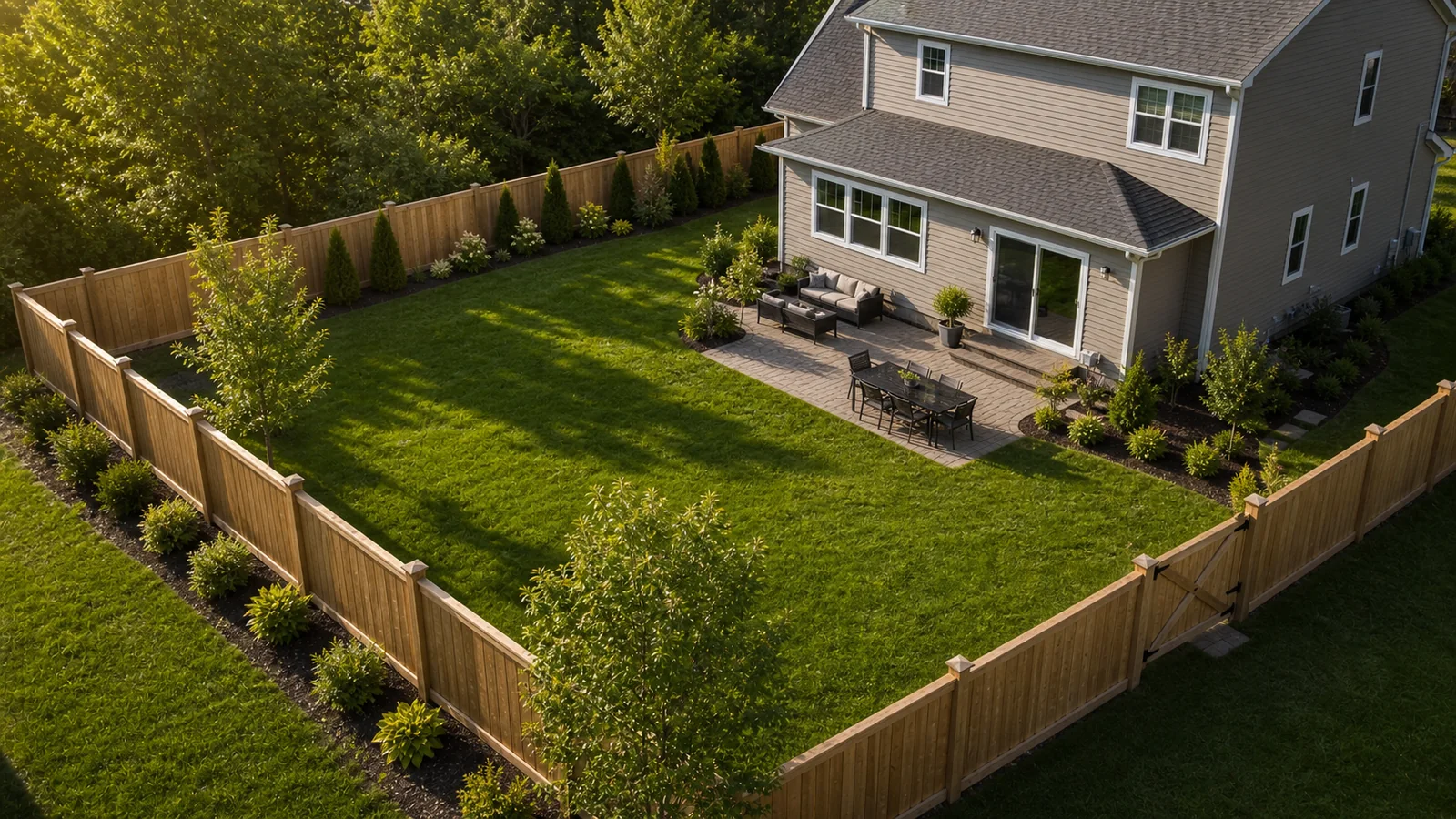
Fence types
Choose the fence style before you price the route
Each option has a different balance of privacy, maintenance, lifespan, gate behavior, slope handling, and installed planning cost. Start with the style, then draw the real property route.
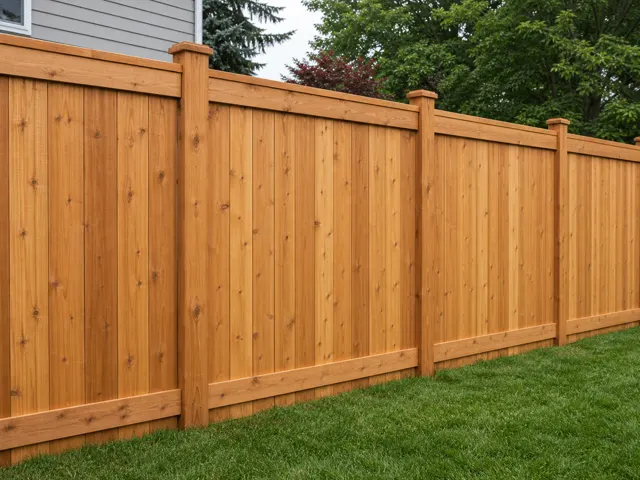
$33 - $50 / ft
Wood privacy
Natural cedar boards provide full privacy and a warm, traditional residential look.
- Best for
- Privacy and customization
- Heights
- 4, 6, 8 ft
- Maintenance
- Medium to high
- Lifespan
- 12-20 years with routine upkeep
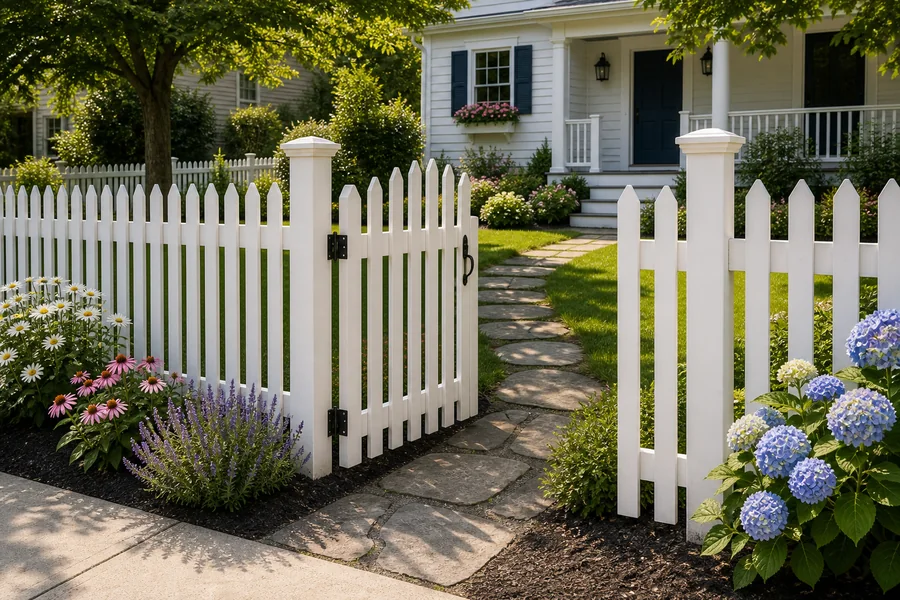
$26 - $38 / ft
Wood picket
Traditional pickets create a friendly front-yard boundary while keeping an open feel.
- Best for
- Front yards and curb appeal
- Heights
- 3, 4 ft
- Maintenance
- Medium
- Lifespan
- 10-18 years with upkeep
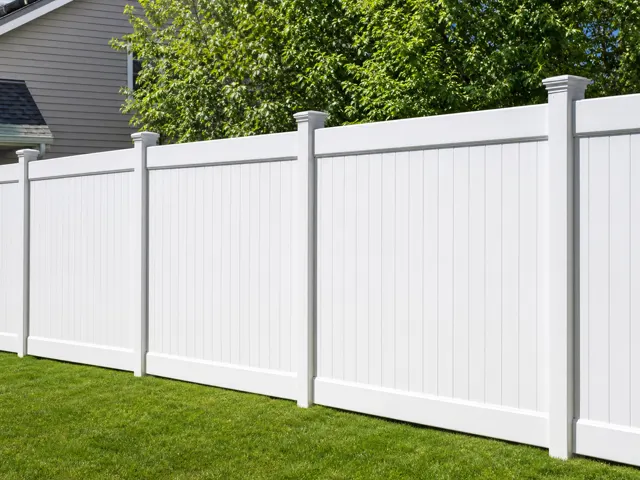
$43 - $65 / ft
Vinyl privacy
Solid interlocking panels deliver full privacy with low routine maintenance.
- Best for
- Low-maintenance privacy
- Heights
- 4, 6, 8 ft
- Maintenance
- Low
- Lifespan
- 20-30 years in typical residential use
$27 - $41 / ft
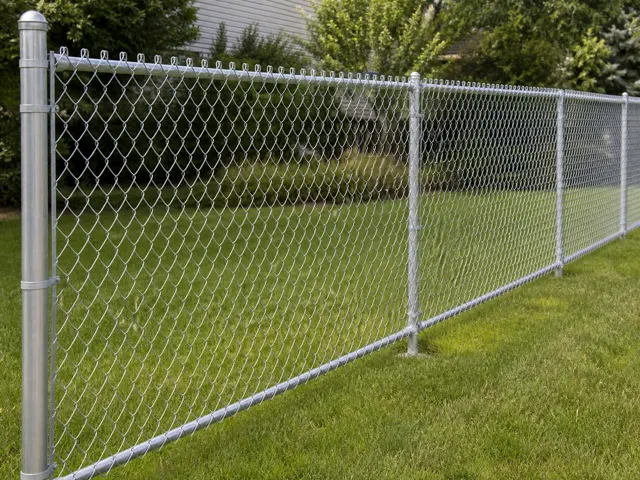
Chain link
Galvanized mesh creates a durable, economical boundary while preserving visibility.
- Best for
- Value and secure boundaries
- Heights
- 4, 6, 8, 10 ft
- Maintenance
- Low
- Lifespan
- 15-25 years, longer for upgraded coatings
$52 - $78 / ft
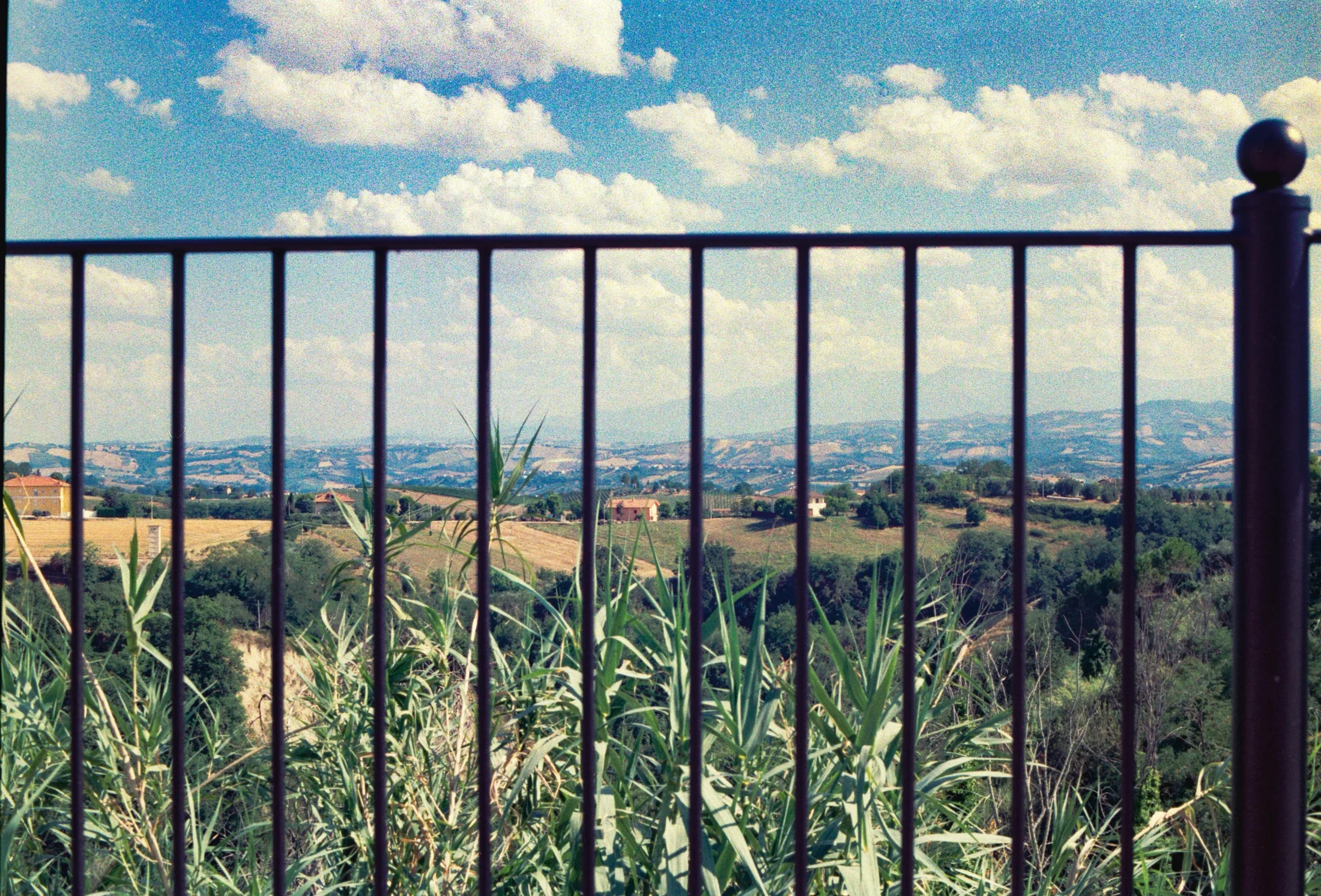
Aluminum
Powder-coated pickets provide an open ornamental appearance without rust-prone steel.
- Best for
- Pools and decorative borders
- Heights
- 4, 5, 6 ft
- Maintenance
- Low
- Lifespan
- 20-30 years in many residential settings
$69 - $103 / ft
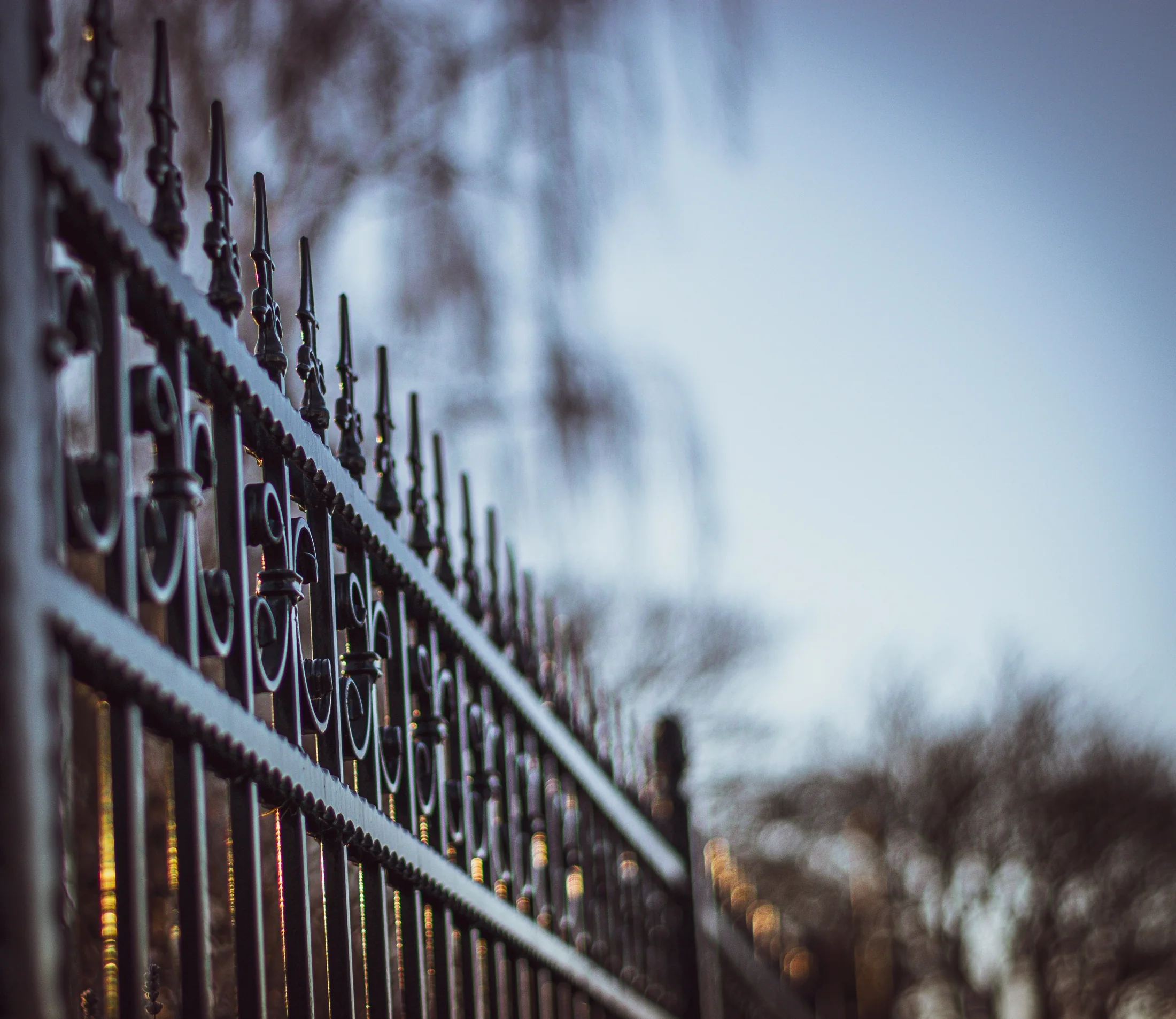
Ornamental steel
Decorative steel pickets provide a heavier ornamental boundary with a formal appearance.
- Best for
- Decorative security
- Heights
- 4, 5, 6 ft
- Maintenance
- Medium
- Lifespan
- 20-30 years with coating maintenance
$19 - $29 / ft
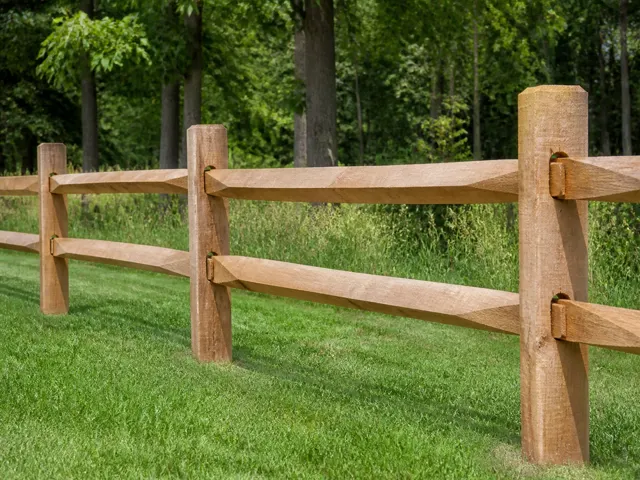
Split rail
Open wood rails define large properties with a simple rural or natural appearance.
- Best for
- Acreage and open boundaries
- Heights
- 3, 4 ft
- Maintenance
- Low to medium
- Lifespan
- 10-20 years depending on wood and soil contact
$19 - $28 / ft
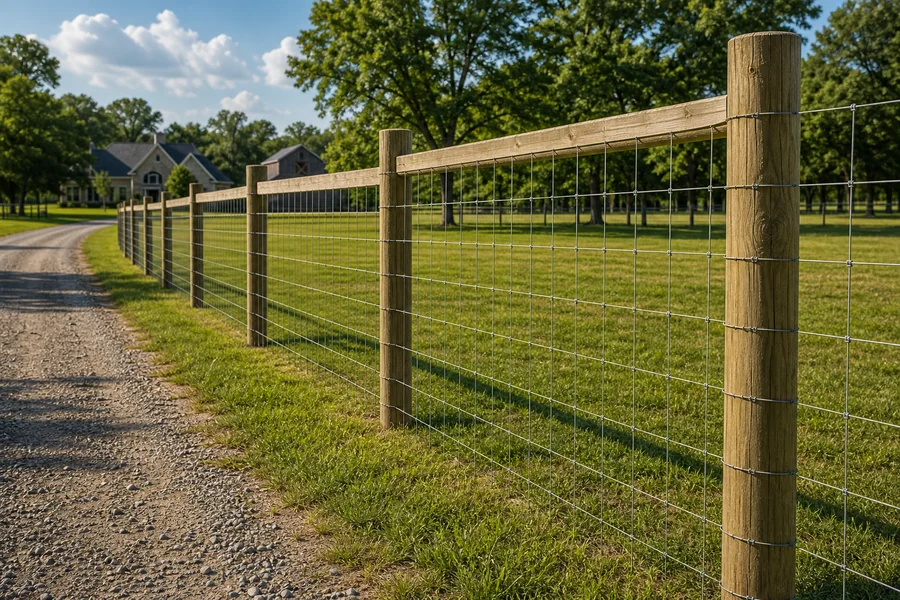
Farm/ranch wire
Wood posts with woven or welded wire define larger yards, acreage, and utility boundaries.
- Best for
- Large properties and acreage
- Heights
- 4, 5 ft
- Maintenance
- Low to medium
- Lifespan
- 12-25 years depending on posts, wire, and exposure
$57 - $86 / ft
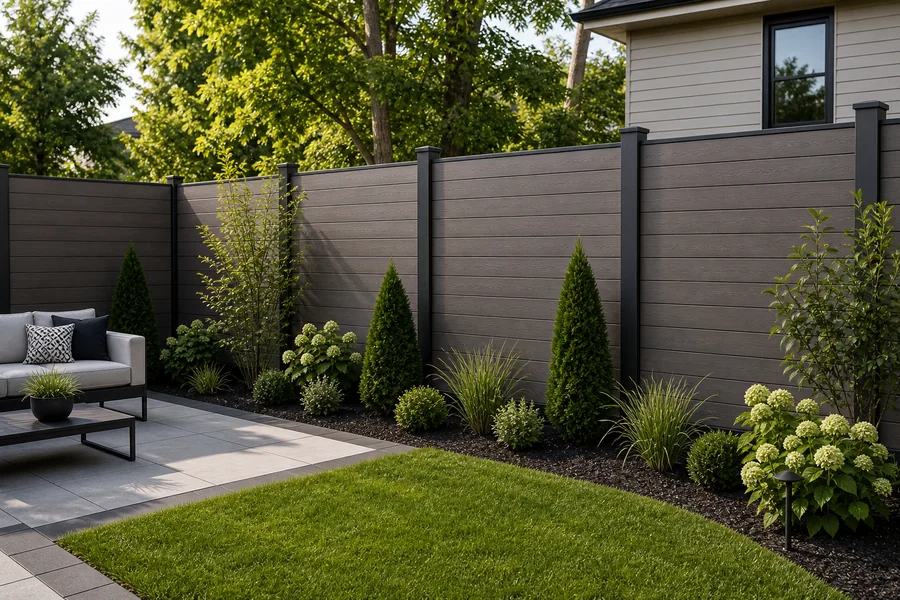
Composite
Composite boards offer a modern privacy look with higher material cost and lower upkeep.
- Best for
- Modern low-maintenance privacy
- Heights
- 4, 6, 8 ft
- Maintenance
- Low
- Lifespan
- 25-35 years for many quality systems
At-a-glance comparison
Compare cost, height, privacy, maintenance, and timing
These are planning ranges for early scope decisions. Actual bids depend on layout, local labor, access, demo, soil, grade, permits, and contractor availability.
| Fence type | Planning range | Heights | Privacy | Maintenance | Lifespan | Install time | Best for |
|---|---|---|---|---|---|---|---|
| Wood privacy | $33 - $50 / ft | 4, 6, 8 ft | High | Medium to high | 12-20 years with routine upkeep | 2-4 days for many residential yards | Privacy and customization |
| Wood picket | $26 - $38 / ft | 3, 4 ft | Low to moderate | Medium | 10-18 years with upkeep | 1-3 days for many front-yard runs | Front yards and curb appeal |
| Vinyl privacy | $43 - $65 / ft | 4, 6, 8 ft | High | Low | 20-30 years in typical residential use | 2-4 days for many residential yards | Low-maintenance privacy |
| Chain link | $27 - $41 / ft | 4, 6, 8, 10 ft | Low unless slats or screening are added | Low | 15-25 years, longer for upgraded coatings | 1-3 days for many residential yards | Value and secure boundaries |
| Aluminum | $52 - $78 / ft | 4, 5, 6 ft | Low | Low | 20-30 years in many residential settings | 1-3 days for many residential yards | Pools and decorative borders |
| Ornamental steel | $69 - $103 / ft | 4, 5, 6 ft | Low | Medium | 20-30 years with coating maintenance | 2-4 days for many residential yards | Decorative security |
| Split rail | $19 - $29 / ft | 3, 4 ft | Low | Low to medium | 10-20 years depending on wood and soil contact | 1-3 days for many open-property runs | Acreage and open boundaries |
| Farm/ranch wire | $19 - $28 / ft | 4, 5 ft | Low | Low to medium | 12-25 years depending on posts, wire, and exposure | 1-4 days depending on acreage and terrain | Large properties and acreage |
| Composite | $57 - $86 / ft | 4, 6, 8 ft | High | Low | 25-35 years for many quality systems | 2-5 days for many residential yards | Modern low-maintenance privacy |
Detailed fence options
Materials, equipment, timing, lifespan, and tradeoffs by fence type
Use these details to choose a starting point before you draw the fence. The estimator can then apply the selected type to the actual footage, gates, heights, and post spacing.
01
Wood privacy
Natural cedar boards provide full privacy and a warm, traditional residential look.
$33 - $50 / ft4, 6, 8 ft common heights8 ft default post spacing2-4 days for many residential yards12-20 years with routine upkeep
Materials and components
- Wood posts
- Rails
- Pickets or boards
- Fasteners
- Post concrete
- Gate hardware
- Stain or sealer when specified
Tools and equipment
- Post hole digger or auger
- String line
- Level
- Circular saw
- Drill or impact driver
- Concrete mixing tools
- Nail gun or screw gun
Install timing and crew notes
Wood privacy fences are flexible on uneven lots and custom layouts, but board alignment, gate framing, post depth, and bracing matter for a clean finished line.
Longevity and maintenance
Wood needs periodic sealing or staining in many climates. Ground contact, sprinklers, heavy shade, and poor drainage can shorten service life.
Cost drivers and tradeoffs
- Usually customizable and repairable
- Maintenance is higher than vinyl or aluminum
- Material quality and board style can move the range
Privacy: HighSecurity: ModeratePets: Strong for privacy and containmentPool context: May work when built to local barrier rules
02
Wood picket
Traditional pickets create a friendly front-yard boundary while keeping an open feel.
$26 - $38 / ft3, 4 ft common heights8 ft default post spacing1-3 days for many front-yard runs10-18 years with upkeep
Materials and components
- Wood posts
- Rails
- Pickets
- Caps
- Fasteners
- Concrete
- Gate hardware
- Paint, stain, or sealer
Tools and equipment
- Post hole digger
- String line
- Level
- Saw
- Drill or nailer
- Tape measure
- Layout spacers
Install timing and crew notes
Picket fences depend on consistent spacing and top-line alignment. They are often used where appearance matters more than full privacy.
Longevity and maintenance
Painted or stained pickets need upkeep. Individual pickets are usually easier to replace than full privacy panels.
Cost drivers and tradeoffs
- Lower privacy than solid fences
- Often less material than privacy fencing
- Decorative details and gates can add labor
Privacy: Low to moderateSecurity: LightPets: Good for smaller pets when picket gaps are tightPool context: Usually not the first choice unless spacing and height meet code
03
Vinyl privacy
Solid interlocking panels deliver full privacy with low routine maintenance.
$43 - $65 / ft4, 6, 8 ft common heights8 ft default post spacing2-4 days for many residential yards20-30 years in typical residential use
Materials and components
- Vinyl posts
- Rails
- Panels or pickets
- Post inserts when specified
- Concrete
- Caps
- Gate kit and hardware
Tools and equipment
- Post hole digger or auger
- String line
- Level
- Rubber mallet
- Saw for panel adjustments
- Concrete tools
- Drill
Install timing and crew notes
Vinyl relies on accurate post spacing and level panel layout. Sloped yards may require stepped panels or special racking details.
Longevity and maintenance
Vinyl avoids painting and staining, but impact damage, extreme cold, and poor-quality panels can affect long-term performance.
Cost drivers and tradeoffs
- Higher material allowance than wood
- Lower routine maintenance
- Panel layout is less forgiving on irregular runs
Privacy: HighSecurity: ModeratePets: Strong for containment and low maintenancePool context: Often used for pool barriers when local requirements are met
04
Chain link
Galvanized mesh creates a durable, economical boundary while preserving visibility.
$27 - $41 / ft4, 6, 8, 10 ft common heights10 ft default post spacing1-3 days for many residential yards15-25 years, longer for upgraded coatings
Materials and components
- Terminal posts
- Line posts
- Top rail
- Chain-link fabric
- Tension wire
- Tension bars
- Bands
- Tie wires
- Concrete
- Gate frame and hardware
Tools and equipment
- Post hole digger
- Fence stretcher or come-along
- Pliers
- Wrenches
- String line
- Level
- Concrete tools
Install timing and crew notes
Chain link installs quickly when the route is clear. Proper fabric tension, terminal posts, and gate alignment are the details that make it feel solid.
Longevity and maintenance
Galvanized and coated systems are durable. Rust usually starts around damaged coating, soil contact, or low-quality hardware.
Cost drivers and tradeoffs
- Often one of the most economical options
- Lower privacy without add-ons
- Good for long runs and utility areas
Privacy: Low unless slats or screening are addedSecurity: ModeratePets: Strong for dogs and utility areasPool context: May work when height, mesh, gate, and latch rules are met
05
Aluminum
Powder-coated pickets provide an open ornamental appearance without rust-prone steel.
$52 - $78 / ft4, 5, 6 ft common heights8 ft default post spacing1-3 days for many residential yards20-30 years in many residential settings
Materials and components
- Aluminum posts
- Picket panels
- Brackets
- Caps
- Concrete
- Gate panels
- Hinges and latches
Tools and equipment
- Post hole digger
- Level
- String line
- Drill
- Wrenches
- Panel cutting tools when needed
- Concrete tools
Install timing and crew notes
Aluminum looks clean around pools and front yards. Panel alignment, post spacing, and slope handling are the main planning points.
Longevity and maintenance
Powder-coated aluminum does not rust like steel, but scratches, gate sag, and poor post setting still need attention.
Cost drivers and tradeoffs
- Low maintenance
- Open view with little privacy
- Good appearance, but decorative panels cost more than utility fencing
Privacy: LowSecurity: ModeratePets: Good when picket spacing works for the petPool context: Common pool-barrier choice when local code is met
06
Ornamental steel
Decorative steel pickets provide a heavier ornamental boundary with a formal appearance.
$69 - $103 / ft4, 5, 6 ft common heights8 ft default post spacing2-4 days for many residential yards20-30 years with coating maintenance
Materials and components
- Steel posts
- Ornamental panels
- Mounting brackets
- Caps
- Concrete
- Gate panels
- Hinges and latches
- Touch-up coating
Tools and equipment
- Post hole digger or auger
- Level
- String line
- Drill
- Wrenches
- Metal cutting tools when needed
- Concrete tools
Install timing and crew notes
Ornamental steel is heavier than aluminum and can feel more substantial. Accurate post layout and corrosion protection are important.
Longevity and maintenance
Steel can last a long time, but coating damage should be touched up to reduce rust risk.
Cost drivers and tradeoffs
- Stronger formal look
- Higher material and labor than aluminum
- Maintenance is more important in wet or salty environments
Privacy: LowSecurity: High for decorative metal fencingPets: Good when picket spacing works for the petPool context: May work when local pool barrier rules are met
07
Split rail
Open wood rails define large properties with a simple rural or natural appearance.
$19 - $29 / ft3, 4 ft common heights10 ft default post spacing1-3 days for many open-property runs10-20 years depending on wood and soil contact
Materials and components
- Split rail posts
- Rails
- Optional wire mesh
- Fasteners or staples
- Gate hardware when needed
- Concrete when specified
Tools and equipment
- Post hole digger
- String line
- Level
- Mallet
- Saw
- Stapler for wire mesh
- Tape measure
Install timing and crew notes
Split rail is best for open boundaries and acreage. Long, simple runs are faster than tight residential corners.
Longevity and maintenance
Post rot is the main concern. Wood species, treatment, drainage, and soil contact affect life span.
Cost drivers and tradeoffs
- Good for long open runs
- Low privacy and security
- Wire mesh can improve pet containment but adds labor
Privacy: LowSecurity: LightPets: Limited unless wire mesh is addedPool context: Usually not suitable as a pool barrier by itself
08
Farm/ranch wire
Wood posts with woven or welded wire define larger yards, acreage, and utility boundaries.
$19 - $28 / ft4, 5 ft common heights10 ft default post spacing1-4 days depending on acreage and terrain12-25 years depending on posts, wire, and exposure
Materials and components
- Wood posts
- Corner braces
- Woven or welded wire
- Staples
- Tension hardware
- Concrete when specified
- Farm gates
Tools and equipment
- Post hole digger or post driver
- Wire stretcher
- Fence pliers
- Stapler
- String line
- Level
- Brace tools
Install timing and crew notes
Farm and ranch wire depends on strong corners and proper wire tension. Terrain changes and long runs need thoughtful bracing.
Longevity and maintenance
Wire coating, post treatment, soil moisture, and animal pressure affect long-term performance.
Cost drivers and tradeoffs
- Efficient for large areas
- Lower privacy
- Corners, bracing, and gates are the critical labor points
Privacy: LowSecurity: Light to moderatePets: Good for larger areas when wire type matches the animalPool context: Usually not suitable as a pool barrier by itself
09
Composite
Composite boards offer a modern privacy look with higher material cost and lower upkeep.
$57 - $86 / ft4, 6, 8 ft common heights6 ft default post spacing2-5 days for many residential yards25-35 years for many quality systems
Materials and components
- Composite boards
- Posts or post sleeves
- Rails or channels
- Fasteners
- Concrete
- Caps
- Gate frame and hardware
Tools and equipment
- Post hole digger or auger
- String line
- Level
- Saw with appropriate blade
- Drill or impact driver
- Concrete tools
- Panel layout tools
Install timing and crew notes
Composite privacy fencing needs accurate layout and proper manufacturer clearances. It is less forgiving than basic wood when the route changes.
Longevity and maintenance
Composite usually lowers routine upkeep, but heat movement, gate framing, and manufacturer instructions matter.
Cost drivers and tradeoffs
- Higher material allowance
- Low routine maintenance
- Modern privacy look with system-specific installation details
Privacy: HighSecurity: ModeratePets: Strong for privacy and containmentPool context: May work when designed to local pool barrier requirements
Fence planning guide
What to think through before requesting fence quotes
A better fence quote request explains more than the material. It shows the route, post layout, gates, height changes, slope, access, old fence, and verification items.
Route layout
Draw the full fence route, including returns, side-yard extensions, utility runs, and sections that will not connect into a closed perimeter.
Post spacing
Most residential systems use roughly 6 to 10 ft spacing. Corners, gates, grade, and material type can change the actual layout.
Gates
Walk gates, double gates, pool gates, and vehicle gates affect posts, hardware, clearances, and labor.
Corners and transitions
Corners, ends, changes in material, and changes in height should be visible in the plan so the quote includes the right posts and hardware.
Height changes
Front-yard, side-yard, privacy, pool, and decorative sections often use different heights. Separate those sections before requesting quotes.
Slope and grade
Stepped panels, racked panels, custom cuts, and uneven grade can change material choice and labor.
Pool and barrier rules
Pool fencing can require specific height, picket spacing, gate swing, latch height, and climb-resistance rules.
Old fence removal
Demo, haul-off, buried concrete, vines, roots, and tight access should be called out with photos.
Access constraints
Narrow side yards, retaining walls, trees, slopes, irrigation, utilities, and neighbors can affect installation time.
Quote prep checklist
What your fence plan should include
The more complete the first request is, the easier it is for contractors to understand the job. The map drawing is still planning-grade and does not replace surveys, utility marking, permits, or field verification.
- Fence route with corners, ends, and extensions
- Preferred fence type and height for each section
- Gate locations, widths, and access needs
- Photos of slope, old fence, trees, tight access, and utility areas
- Old fence removal or brush clearing notes
- Property-line, HOA, permit, pool-barrier, and 811 utility-marking reminders
Start with the property map
Draw the fence once, then compare the options.
Start with a visual route, choose the fence type and height, add gates, then request quotes when the scope is clear.